
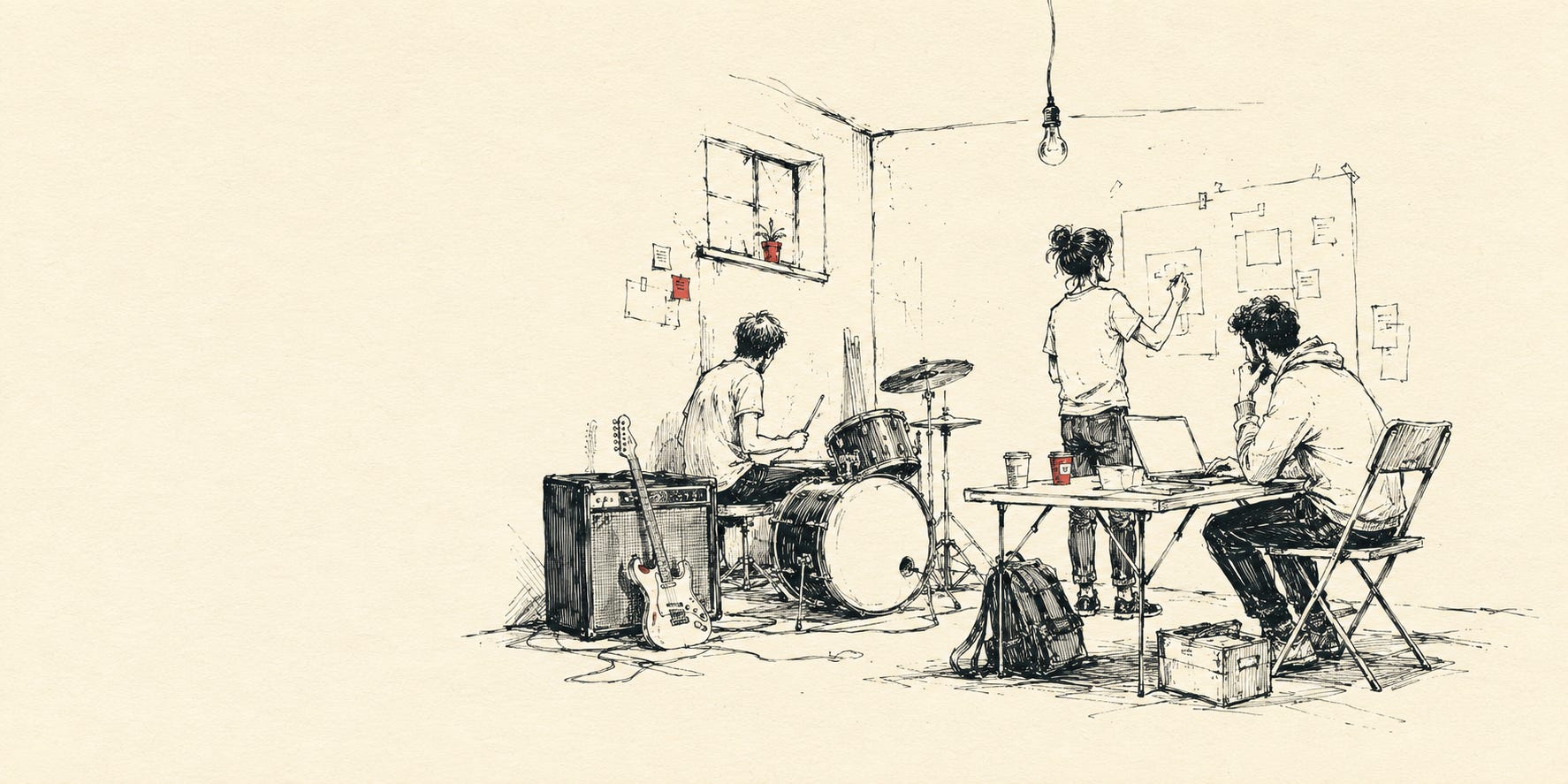
Before I was into startups, I was into music. I grew up playing drums, and played in bands for years. When I was young and people would ask me what I wanted to be, I’d say a rock star. While I never hit it big, I do feel very fortunate that I was able to play at some of my favorite venues in NYC, such as Bowery Ballroom and Mercury Lounge.
What I loved about rock bands, despite their “anti-sellout” ethos, was that they are very entrepreneurial. There’s nothing more entrepreneurial than a couple of people creatively willing something into the world and doing everything in their power to get millions of people to buy into it.
In addition to being in bands, I worked at Atlantic Records as a web developer for about 5 years after college. During my time there, I found myself being the person that took the first meeting with many of the startups who wanted to work with the artists. And that was my first real exposure to startups.
I immediately recognized that startups were just like bands. A couple of people creatively willing something into the world and doing everything in their power to get millions of people to buy into it. And they were doing something I thought I could actually be better at than making music: creating software. Shortly after I started meeting with startups, I left Atlantic to join one myself.
Many years later, I still see so many similarities between artists and startup founders. But when we, as founders and investors, study “the greats”, we often don’t consider artists as those to look up to. But we should. If you look at the careers of many of the great artists of our time, many who are still active, you see stories that look very similar to the twists and turns of a great startup.
Beastie Boys started as a hardcore punk band and completely reinvented themselves as hip-hop artists (classic pivot story).
The Red Hot Chili Peppers lost a founding member to an overdose, cycled through lineups, nearly broke up more than once, then hit their peak years later (startup that almost runs out of cash, then somehow turns things around and goes on to change the world).
Jay-Z got rejected by every label. So he just started his own (founder who can’t get funded and bootstraps instead).
For a little while after I left music for startups, I’d second-guess myself and wonder if I made a mistake trading making music for software. But some days it doesn’t feel like I traded anything at all.
hell yeah